Are Volvos Expensive to Maintain? Repair Costs, Reliability, and Long-Term Ownership
Are Volvos expensive to maintain? Learn about Volvo repair costs, maintenance expenses, reliability, common problems, and long-term ownership costs before buying.

Volvo has earned a reputation for building vehicles focused on safety, comfort, and practical luxury. The brand is known for its Scandinavian design, advanced safety technology, and comfortable driving experience. Unlike some luxury manufacturers that focus mainly on performance, Volvo has traditionally attracted buyers looking for a refined vehicle that works well for daily driving, family use, and long-distance travel.
However, one question often comes before purchasing a Volvo: are Volvos expensive to maintain?
The answer depends on several factors, including the model, age, mileage, engine type, driving habits, and maintenance history. Volvos generally cost more to maintain than mainstream brands such as Toyota or Honda because they use premium components, advanced electronics, and sophisticated safety systems. However, their ownership costs can be competitive compared with many other European luxury vehicles.
A well-maintained Volvo can provide years of dependable service, but buyers should understand that premium vehicles require proper care. Choosing the right model, maintaining it regularly, and addressing problems early can make a significant difference in long-term ownership expenses.
Are Volvos Expensive to Maintain?
Volvos are considered premium vehicles, so their maintenance costs are usually above average. They are not the cheapest vehicles to own, but they are also not among the most expensive luxury cars to maintain.
Compared with mainstream brands, Volvo ownership usually involves higher expenses because of:
Premium replacement parts
Advanced safety technology
Turbocharged engines
Hybrid systems in newer models
Complex electronic components
Specialist repair requirements
Routine Volvo maintenance includes:
Engine oil and filter changes
Brake inspections
Tyre replacement
Fluid checks
Battery replacement
Scheduled servicing
Software updates on newer models
These regular services are generally manageable, but repair costs can increase when more complex components require attention.
For example, replacing a basic mechanical component may be straightforward, but repairing an electronic module, safety sensor, or hybrid component can require specialised equipment and trained technicians.
Compared with brands such as Mercedes-Benz, BMW, and Audi, Volvo maintenance costs can be more predictable in some areas. However, advanced technology, premium parts, and specialised repairs mean owners should still budget for premium vehicle expenses.
For buyers researching luxury vehicle ownership costs, comparing brands before purchase can help set realistic expectations.
What Affects Volvo Maintenance Costs?
Not every Volvo has the same ownership costs. Several factors influence how much an owner may spend over time.
Model and Vehicle Size
The Volvo model plays a major role in determining maintenance expenses.
Smaller models such as the S60 sedan or XC40 compact SUV generally have lower running costs compared with larger vehicles like the XC90.
Larger Volvo models may require more expensive components, including:
Larger tyres
Bigger brake systems
More suspension components
Additional technology features
For example, a Volvo XC90 used as a family SUV may cost more to maintain than an S60 because of its size, weight, and additional equipment.
Choosing a vehicle that matches your needs is important because buying a larger model than necessary can increase long-term expenses.
Age and Mileage
Age and mileage are two of the biggest factors affecting Volvo repair costs.
A newer Volvo with lower mileage and warranty coverage will usually have more predictable expenses. An older Volvo with higher mileage may require repairs because of normal wear.
Common age-related maintenance areas include:
Suspension components
Cooling system parts
Battery and electrical systems
Sensors
Engine accessories
This does not mean older Volvos are unreliable. A high-mileage Volvo with complete maintenance records can often be a better purchase than a newer vehicle with poor service history.
The condition of the vehicle matters more than the mileage number alone.
Service History
A complete maintenance history is one of the most important factors when buying or owning a Volvo.
Regular servicing helps prevent small problems from becoming expensive repairs. It also gives future owners a clearer idea of what costs to expect.
Important records to check include:
Previous service history
Major repairs completed
Maintenance intervals
Replacement parts used
Ownership history
A Volvo that has been maintained properly is usually easier to predict in terms of future expenses.
Average Volvo Maintenance and Repair Costs
Volvo maintenance costs vary depending on the model, location, labour rates, and vehicle condition. A newer vehicle with regular servicing will usually have more predictable costs, while an older premium vehicle may require additional repairs.
Typical Volvo ownership expenses include:
Maintenance Area | Expected Cost Level |
Routine servicing | Moderate |
Oil and filter changes | Low to moderate |
Brake replacement | Moderate to high |
Tyre replacement | Moderate to high depending on model |
Suspension repairs | Higher on older vehicles |
Electronic repairs | Can become expensive |
Hybrid system repairs | Potentially costly |
Routine maintenance is usually manageable, but owners should plan for larger expenses as the vehicle ages.
SUV models often cost more to maintain because they use larger tyres, heavier suspension components, and additional equipment. A Volvo XC90, for example, will generally have higher running costs than a smaller sedan.
The biggest factor in keeping costs under control is preventive maintenance. Addressing issues early can reduce the chance of major repairs later.
Common Volvo Repairs and Problems
Volvo vehicles are engineered to a high standard, but like any premium brand, they can develop problems over time. Understanding common repair areas helps owners prepare for potential expenses.
Electrical and Technology Issues
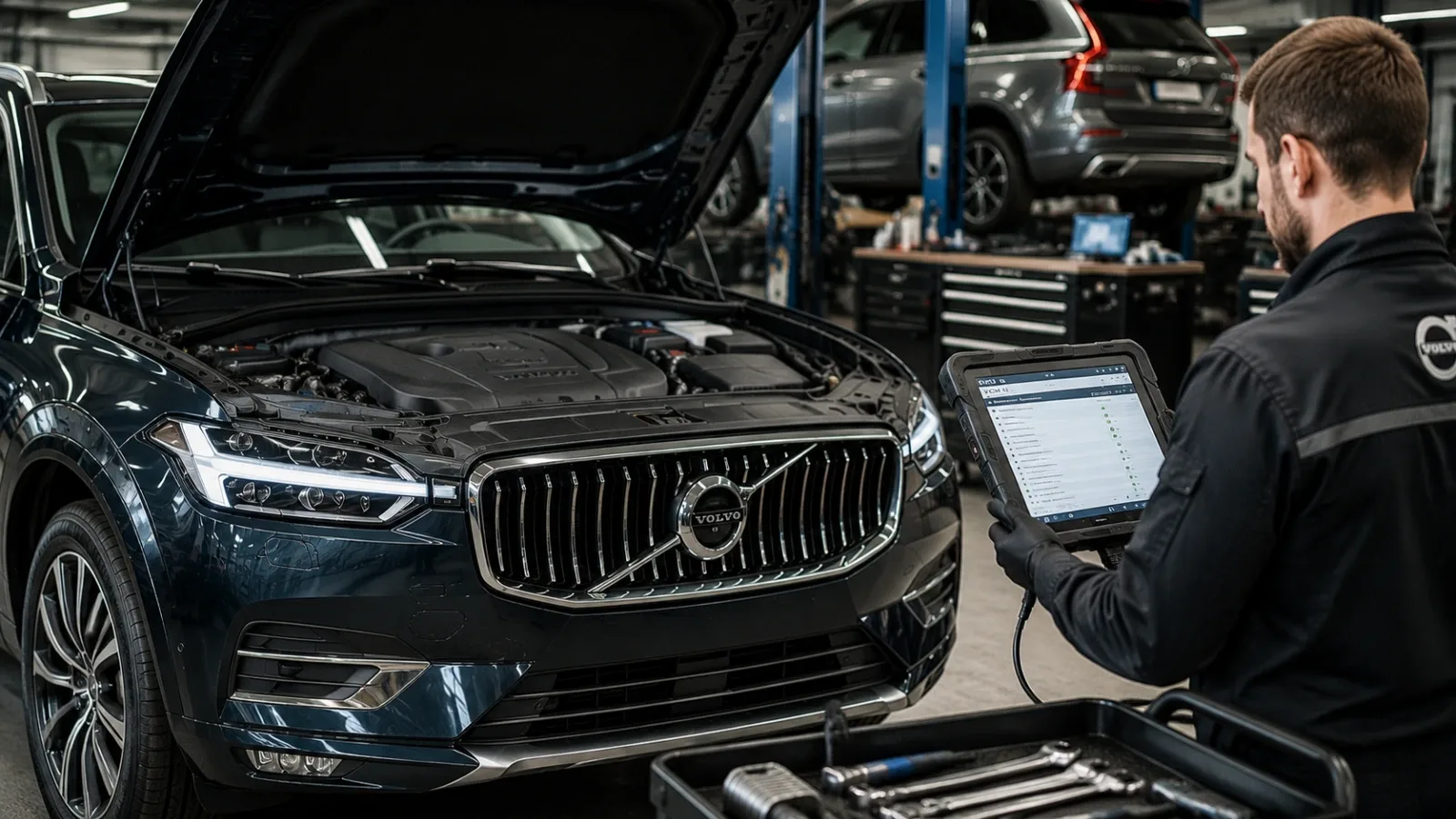
Modern Volvo vehicles rely heavily on electronic systems. These features improve safety and convenience but also increase complexity.
Possible issues include:
Infotainment problems
Sensor faults
Software-related issues
Battery-related electrical problems
Camera and safety system calibration
Many newer Volvo problems can be resolved through software updates, but proper diagnosis may require specialist equipment.
Suspension Components
Volvo vehicles are designed for comfort and stability, especially during long-distance driving. Suspension components naturally wear over time and may require replacement.
Common areas include:
Shock absorbers
Control arms
Bushings
Suspension mounts
SUV models such as the XC60 and XC90 may experience higher suspension wear because they are heavier and often carry more passengers or cargo.
Premium suspension systems can provide excellent comfort, but repairs may become more expensive when advanced components are involved.
Engine and Cooling System Repairs
Volvo engines can provide strong durability when properly maintained. However, ignoring regular servicing can increase the risk of expensive repairs.
Potential repair areas include:
Cooling system components
Turbocharger-related parts
Engine seals
Fuel system components
Engine accessories
Regular oil changes are especially important for turbocharged engines because proper lubrication helps protect internal components.
Hybrid System Repairs
Many newer Volvo models use plug-in hybrid technology to improve efficiency and performance.
Hybrid systems can reduce fuel consumption, but repairs outside warranty coverage may be expensive.
Potential areas include:
Battery components
Charging systems
Electrical control units
Hybrid sensors
Buyers considering a used Volvo hybrid should check battery condition, warranty coverage, and service history before purchasing.
Volvo Reliability: Are They Good Long-Term Cars?
Volvo reliability depends heavily on the model year, engine choice, and maintenance history. Some Volvo models can provide excellent long-term durability, while neglected examples may develop expensive issues because of their advanced technology and complex systems.
Unlike simpler vehicles with fewer electronic features, modern Volvos combine mechanical components with advanced safety and convenience systems. This means proper maintenance is important for keeping ownership costs predictable.
A Volvo that receives regular servicing can be a dependable long-term vehicle. However, buyers should understand that reliability is not only about avoiding major failures. It is also about how manageable the ownership costs are over time.
Factors that usually contribute to a better Volvo ownership experience include:
Following recommended service intervals
Completing regular oil changes
Repairing small problems before they become larger issues
Using quality replacement parts
Choosing a vehicle with complete service records
When buying used, maintenance history is often more important than mileage alone. A higher-mileage Volvo that has been properly maintained may be a better choice than a lower-mileage example with neglected servicing.
Volvo Maintenance Costs by Popular Models
Different Volvo models have different ownership requirements. Vehicle size, engine options, technology, and equipment levels all influence maintenance expenses.
Volvo XC60 Maintenance Costs
The Volvo XC60 is one of the brand's most popular models because it offers a balance of luxury, practicality, and manageable size.
Compared with larger SUVs, the XC60 can provide a more balanced ownership experience. It offers premium features and advanced safety technology without some of the higher running costs associated with larger vehicles.
Common maintenance areas include:
Routine servicing
Brake components
Tyres
Suspension parts
Electronic systems
The XC60 is often a suitable choice for buyers who want Volvo comfort and safety while keeping ownership expenses more reasonable.
Volvo XC90 Maintenance Costs
The Volvo XC90 is the brand's larger three-row SUV designed for families who need additional space and comfort.
Because of its size and higher equipment levels, the XC90 can have higher maintenance costs compared with smaller Volvo models.
Owners should consider potential expenses related to:
Larger tyres
Bigger brake components
More complex suspension systems
Additional safety technology
More interior features
A well-maintained XC90 can be an excellent long-term family SUV. However, buyers should pay close attention to service records, especially when considering older models.
Volvo S60 Maintenance Costs
The Volvo S60 sedan can be a practical option for buyers who want premium features without the additional size of an SUV.
Its smaller design can help reduce some running costs, including:
Tyre expenses
Brake wear
Suspension stress
The S60 is often appealing to drivers who want Volvo safety, comfort, and quality while keeping maintenance requirements more manageable.
Volvo S90 Maintenance Costs
The Volvo S90 sits higher in Volvo's luxury sedan range and focuses on comfort, premium materials, and advanced features.
Because it includes more upscale equipment, ownership costs may be higher than smaller Volvo models.
Potential maintenance areas include:
Advanced electronic features
Premium interior components
Suspension systems
Technology-related repairs
The S90 is a strong choice for buyers prioritising luxury and comfort, but like other premium sedans, it requires proper maintenance to avoid expensive repairs.
The Cheapest Volvo Is Not Always the Cheapest to Own
One mistake buyers often make is choosing a Volvo only based on the lowest purchase price.
A cheaper used Volvo may look attractive initially, but it could have hidden problems caused by:
Missed maintenance
Delayed repairs
Poor-quality replacement parts
Lack of service records
A vehicle with a slightly higher purchase price but complete maintenance history may save money in the long run.
For example, replacing worn components before they fail and keeping up with scheduled servicing can prevent larger repair bills later.
When buying a used Volvo, condition and history are usually more important than simply finding the lowest-priced example.
How to Reduce Volvo Ownership Costs
Although Volvo maintenance costs are higher than mainstream vehicles, owners can take several steps to keep expenses under control.
Follow Preventive Maintenance
Regular maintenance is one of the most effective ways to avoid unexpected repairs.
Important steps include:
Changing oil at recommended intervals
Checking fluid levels
Replacing filters when required
Inspecting brakes and tyres
Addressing warning signs early
Small problems are usually cheaper to fix before they develop into larger mechanical issues.
Choose the Right Repair Facility
Dealership servicing provides manufacturer-specific knowledge, but it can be more expensive.
An experienced independent Volvo specialist can often provide:
Routine servicing
Diagnostic checks
Preventive repairs
Quality replacement parts
The goal should not be finding the cheapest repair option. Choosing a qualified technician who understands Volvo vehicles can help avoid incorrect repairs and additional costs.
Check the Vehicle Before Buying Used
A proper inspection is important before purchasing any used premium vehicle.
Buyers should check:
Service history
Previous repairs
Warning lights
Brake and tyre condition
Suspension performance
Electrical systems
Signs of accident damage
A professional inspection can identify potential problems before they become the buyer's responsibility.
Are Volvos Worth Buying?
Volvos can be worth buying for drivers who value safety, comfort, and premium engineering.
They are especially suitable for buyers who want:
Strong safety features
Comfortable interiors
Refined driving experience
Practical family vehicles
Long-distance comfort
However, buyers looking for the lowest possible maintenance costs may find mainstream brands more affordable.
The important thing is understanding what comes with premium ownership. Volvo vehicles offer advanced technology and quality engineering, but those benefits also require proper maintenance.
For buyers who select the right model and maintain it correctly, Volvo ownership can provide a rewarding balance of comfort, safety, and long-term usability.
Frequently Asked Questions
Are Volvos expensive to repair?
Volvos are generally more expensive to repair than mainstream vehicles because they use premium parts, advanced technology, and specialised systems. However, repair costs can be competitive compared with other European luxury brands.
How much does Volvo maintenance cost per year?
Volvo maintenance costs vary depending on the model, mileage, location, and vehicle condition. Newer vehicles usually have more predictable expenses, while older models may require additional repairs due to wear.
Are Volvos reliable after 100,000 miles?
A Volvo can remain reliable beyond 100,000 miles when properly maintained. Service history, previous repairs, and overall condition are often more important than mileage alone.
Which Volvo model is cheapest to maintain?
Smaller models such as the S60 or XC40 generally have lower running costs than larger SUVs like the XC90 because they use fewer expensive components.
Is a used Volvo worth buying?
A used Volvo can be a good purchase if it has a complete service history and passes a proper inspection. Buyers should focus on condition and maintenance records rather than only the purchase price.
Final Thoughts
So, are Volvos expensive to maintain? Volvos are not the cheapest vehicles to own, but they are also not among the most expensive premium cars to maintain.
Their ownership costs depend on several factors, including the model, maintenance history, technology, and how the vehicle has been cared for over time. Smaller models may offer more manageable running costs, while larger and more advanced vehicles can require a higher maintenance budget.
For buyers who prioritise safety, comfort, and premium engineering, a Volvo can be a smart long-term choice. The key is selecting the right model, checking its history carefully, and keeping up with servicing from the beginning.
A well-maintained Volvo can deliver years of dependable service while providing the safety, comfort, and refinement that make the brand stand out.